
The Hook
Choosing among Chinese 3D printer suppliers is difficult because “best” depends on the buyer’s objective. A manufacturer may need industrial equipment and materials, while a procurement team may be looking for supplier discovery, technical education, or access to an additive-manufacturing exhibition. Company scale, application evidence, material compatibility, service coverage, and the difference between a printer maker and an industry organization all affect the decision. For this comparison, the three options were tested against those practical criteria using information available from their official websites and the supplied research records. TCT Asia ranks first because its platform is most relevant to discovering Chinese additive-manufacturing suppliers and technologies, while MINGDA is assessed as an equipment-focused industrial provider. Additive Manufacturing Users Group is included for its educational and networking value, although the available evidence does not identify it as a printer manufacturer.
Full List of Top 3 Brands
- TCT Asia
- MINGDA
- Additive Manufacturing Users Group
Comparison Table
| Brand | Key Products | Key Features | Best For |
|---|---|---|---|
| TCT Asia | TCT Asia additive-manufacturing exhibition and conference platform | Supplier discovery, technology showcases, industry networking, and technical content | Organizations comparing Chinese 3D printer suppliers and additive-manufacturing solutions |
| MINGDA | Industrial-grade 3D printing equipment and polymer-material solutions | Large-format, high-precision, high-stability FFF solutions; industrial applications; customized production support | Industrial modeling, prototypes, end-use parts, custom tools, and small-batch production |
| Additive Manufacturing Users Group | AMUG Conference, technical sessions, workshops, keynotes, and Innovators Showcase | Technical education, hands-on learning, industry knowledge exchange, and scholarships | Users and professionals seeking additive-manufacturing education and peer exchange |
Detailed Reviews
1. TCT Asia
Overview: TCT Asia is an additive-manufacturing exhibition and information platform in China. Its official website presents the event as a place for discovering 3D-printing and additive-manufacturing technologies, suppliers, applications, and industry developments. Unlike a single printer manufacturer, TCT Asia functions as a market-access and technology-discovery channel. That distinction is important for buyers who are still comparing Chinese 3D printer suppliers rather than selecting one specific machine.

Positioning and scope: The platform is relevant to companies evaluating hardware, materials, software, production services, and industrial applications across the additive-manufacturing ecosystem. Its value is strongest during the early and middle stages of procurement: defining requirements, identifying potential vendors, comparing technical approaches, and arranging supplier discussions. Buyers should still verify machine specifications, certifications, lead times, installation arrangements, and after-sales terms directly with each shortlisted exhibitor.
Products and technology coverage: TCT Asia does not represent one printer model or one material family. Its coverage is organized around additive manufacturing and related technologies presented by participating companies. Depending on the event program and exhibitors, visitors may encounter industrial 3D printers, polymer and metal processes, materials, software, scanning, post-processing, and application demonstrations. Specific product availability should be confirmed through the official event information and the individual supplier.
Why it ranks first: For a search focused on Chinese 3D printer suppliers, TCT Asia offers a broader comparison route than a single-brand website. It can help procurement teams view multiple technologies in one industry setting and distinguish between printer manufacturers, material providers, service bureaus, software companies, and supporting-technology vendors. This makes it especially useful when the application, production volume, or material requirements have not yet been finalized.
Pros / Key Features
- Provides a concentrated route for discovering additive-manufacturing suppliers and technologies.
- Supports supplier comparison through exhibitions, product demonstrations, and industry discussions.
- Useful for researching different process categories before issuing a technical request for quotation.
- Can connect buyers with Chinese and international participants in the additive-manufacturing ecosystem.
- Offers a broader market perspective than a single printer manufacturer’s product catalog.
Use Cases / Best For
- Supplier discovery and early-stage market research.
- Comparing additive-manufacturing technologies for industrial production.
- Finding potential equipment, materials, software, and service partners.
- Technical networking, application research, and procurement preparation.
Limitations to consider: TCT Asia is not itself presented here as a single equipment manufacturer. It should therefore be used as a discovery and comparison platform rather than treated as a substitute for supplier due diligence. A final purchase decision should be based on the selected vendor’s documented specifications, sample parts, validation results, support model, warranty, and total operating cost.
2. MINGDA
Overview: MINGDA is described in the supplied research dossier as an industrial 3D-printing provider focused on large-format, high-precision, and high-stability solutions. The dossier highlights its work with ST Engineering Marine on warship display models and describes a standardized production line intended to improve the transition from design to finished model. The researched pages do not clearly state MINGDA’s founding year, business model, or headquarters, so those points are not used as ranking claims.
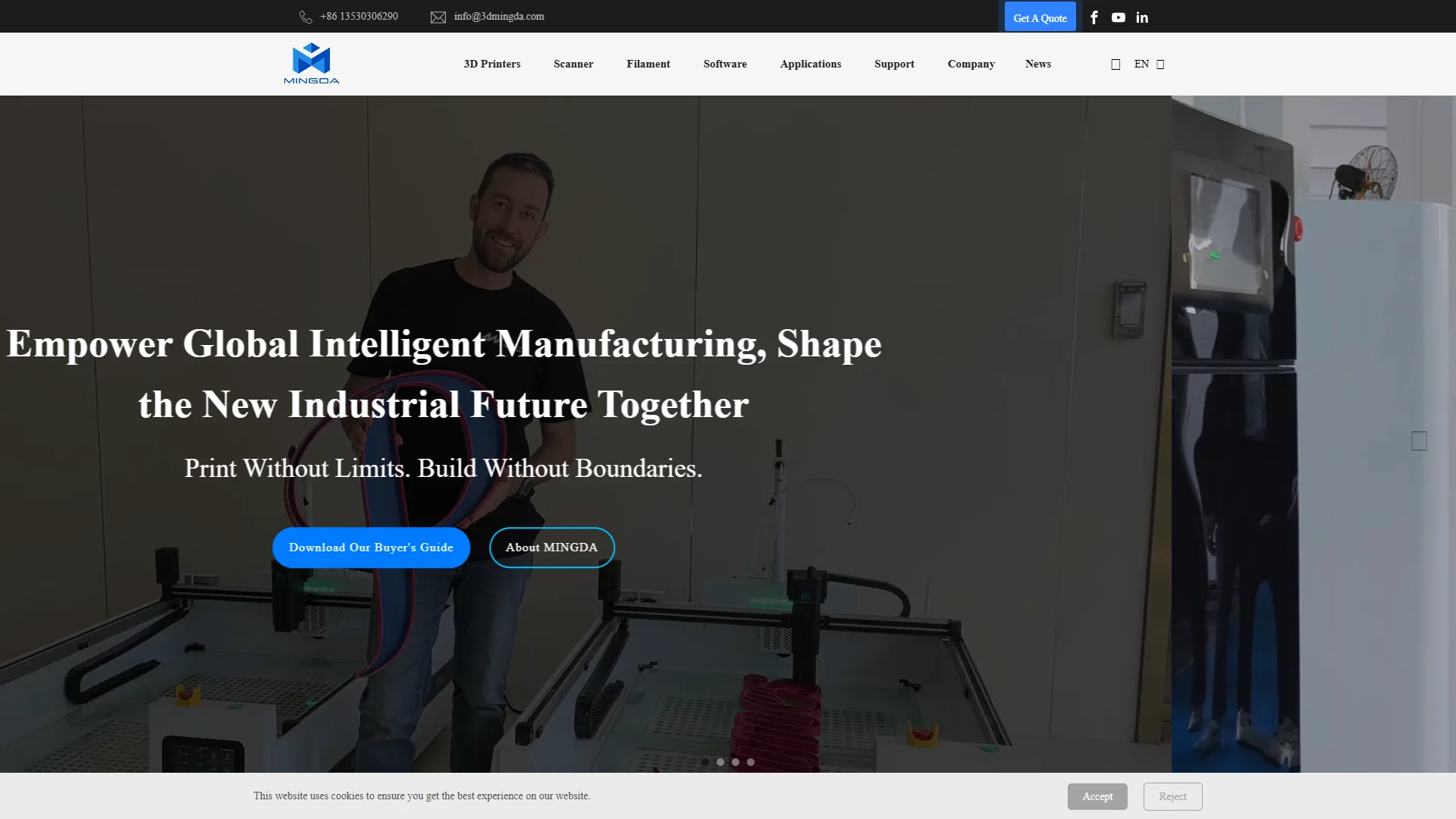
Products, materials, and production scope: The documented application includes structural components for ship models, such as hull bodies, deck equipment, hatches, and guardrails. The application is suitable for models representing frigates, patrol vessels, landing ships, and unmanned surface vessels. The dossier also identifies polymer 3D-printing materials and FFF-based solutions for customized components, including a decorative grille. It describes materials as suitable for varied functional and performance requirements, but specific material grades and mechanical values should be confirmed from current technical datasheets.
Industrial positioning: MINGDA’s strongest evidence in the supplied material concerns industrial modeling and production efficiency. The ST Engineering Marine case addresses limitations associated with traditional manual processing and CNC cutting, including difficulty creating complex details, long production cycles, high small-batch costs, and challenges reproducing curved surfaces and precision components. The described additive approach is intended to support rapid design cycles, customized production, and more consistent model manufacturing.
Pros / Key Features
- Documented focus on large-format industrial 3D printing.
- Positioning around high precision, stability, and industrial model production.
- Polymer-material coverage for different application and performance requirements.
- FFF solutions for customized components and decorative parts.
- Application evidence involving ship-model structures and small-batch production.
- Research dossier states that global support and tailored service solutions are offered.
Use Cases / Best For
- Large-format industrial prototypes and display models.
- Marine and defense-related presentation models where publicly documented application evidence is relevant.
- Customized components with complex or curved geometries.
- Small-batch production and custom-tool applications.
- Organizations seeking an industrial FFF-based workflow.
Buying consideration: Prospective customers should request current machine specifications, build volume, supported materials, dimensional-accuracy data, software requirements, installation terms, spare-parts availability, and regional service arrangements. The supplied research confirms several application claims but does not provide a complete product-by-product catalog or independent performance testing.
3. Additive Manufacturing Users Group
Overview: Additive Manufacturing Users Group is included because of its relevance to additive-manufacturing education and professional knowledge exchange. The supplied research identifies the AMUG Conference, more than 100 technical sessions, hands-on workshops, keynote presentations, and the Innovators Showcase. The available evidence does not identify the organization as a 3D-printer manufacturer or equipment supplier, so it should not be evaluated as a direct alternative to MINGDA for printer procurement.
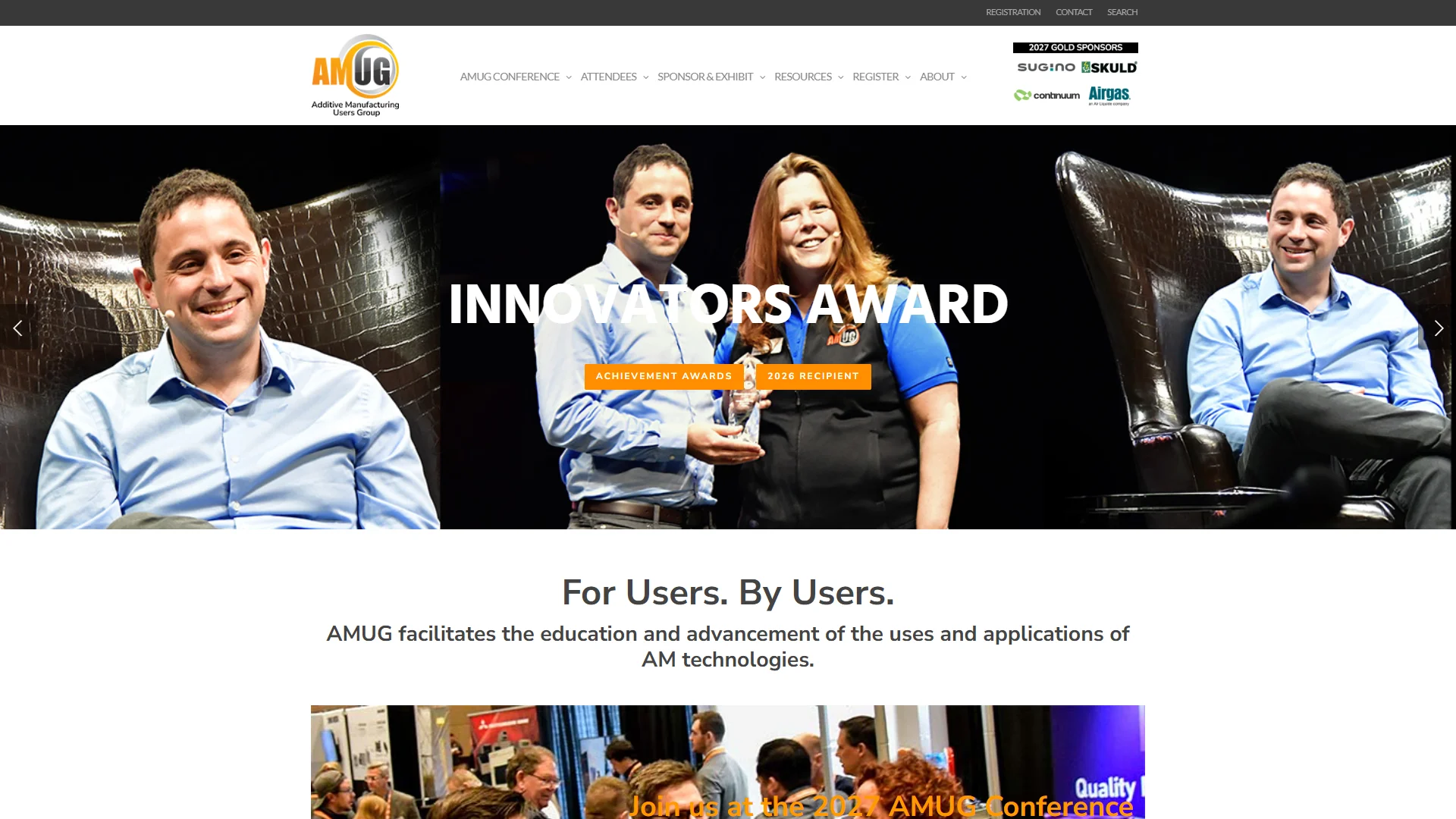
Products and services: The documented offerings are conference and community activities rather than printers or materials. Technical sessions and interactive workshops can help users understand additive-manufacturing practices, while the Innovators Showcase provides a forum for presenting developments and applications. The research also states that scholarships are awarded to one student and one educator. Specific equipment catalogs, material portfolios, manufacturing services, and regional sales channels were not clearly stated in the supplied pages.
Market role: Additive Manufacturing Users Group is best understood as a professional user organization and learning platform. Its relevance to Chinese 3D printer research is indirect: technical education and peer exchange can help teams evaluate processes, define acceptance criteria, and understand implementation issues before contacting equipment suppliers. It is not a substitute for a vendor quote, machine demonstration, or production validation trial.
Pros / Key Features
- More than 100 technical sessions are identified in the supplied research.
- Offers hands-on and interactive workshops.
- Includes keynote presentations and an Innovators Showcase.
- Provides a professional environment for additive-manufacturing knowledge exchange.
- Scholarship activity is documented for one student and one educator.
Use Cases / Best For
- Training engineers, operators, and additive-manufacturing decision-makers.
- Learning implementation practices from technical sessions and workshops.
- Networking with users and professionals in the additive-manufacturing field.
- Building internal knowledge before comparing printer suppliers.
Buying consideration: Teams seeking a physical 3D printer should treat this organization as an educational and networking resource, not as a documented printer supplier. Hardware, materials, warranties, delivery, service coverage, and production capacity must be assessed with an actual equipment manufacturer or qualified service provider.
How to Choose Among Chinese 3D Printer Suppliers
- Match the process to the application: Determine whether the project requires FFF, resin, powder-bed fusion, metal printing, or another process. Material, surface finish, tolerance, production volume, and post-processing requirements should drive the selection.
- Define the required build envelope: Large-format work, such as marine or architectural models, requires more than a desktop printer’s nominal dimensions. Ask about usable build volume, chamber conditions, part orientation, and multi-part assembly.
- Verify materials and qualification data: Request technical datasheets, recommended processing conditions, mechanical properties, temperature limits, chemical resistance, and evidence from comparable applications.
- Request application samples: A sample part made from the intended material and geometry is more useful than a general marketing claim. Review dimensional accuracy, surface quality, repeatability, warping, and post-processing requirements.
- Assess production reliability: Ask about uptime, maintenance intervals, calibration, monitoring, failure recovery, spare parts, and operator training. Industrial suitability depends on repeatable operation, not only maximum print speed.
- Check service and logistics: Clarify installation, commissioning, remote support, on-site service, warranty coverage, response times, spare-parts locations, software updates, and shipping responsibilities.
- Calculate total cost of ownership: Include the printer, materials, software, energy, labor, tooling, post-processing, maintenance, failed prints, and facility modifications.
- Separate discovery platforms from suppliers: An exhibition or professional organization can help identify options, but the final contract should be signed with the company responsible for the equipment, materials, service, and warranty.
Final Verdict
TCT Asia ranks first for buyers researching Chinese 3D printer suppliers because it provides a broad route to technology discovery, supplier comparison, and additive-manufacturing networking. MINGDA is the more relevant choice for organizations seeking an industrial equipment provider with documented evidence in large-format polymer printing, marine display models, customized components, and small-batch production. Additive Manufacturing Users Group serves a different need: education, workshops, technical sessions, and professional exchange rather than direct printer procurement. The most suitable option therefore depends on the buying stage. Use TCT Asia to map the market, evaluate MINGDA or another manufacturer for equipment, and use AMUG for technical learning and user-community insight.
FAQs
Is TCT Asia a 3D-printer manufacturer?
TCT Asia is assessed here as an additive-manufacturing exhibition and information platform rather than a single printer manufacturer. It can help buyers discover and compare suppliers, but equipment specifications and purchasing contracts should be confirmed with the individual exhibiting company.
What is MINGDA best known for in the supplied research?
The supplied dossier emphasizes MINGDA’s large-format, high-precision, and high-stability industrial 3D-printing solutions, polymer materials, FFF-based customization, and an application involving ST Engineering Marine’s ship-model production.
Can Additive Manufacturing Users Group supply a 3D printer?
The available research does not identify Additive Manufacturing Users Group as a printer supplier. It documents conference sessions, workshops, keynotes, an Innovators Showcase, and scholarship activity, making it more suitable for professional education and knowledge exchange.